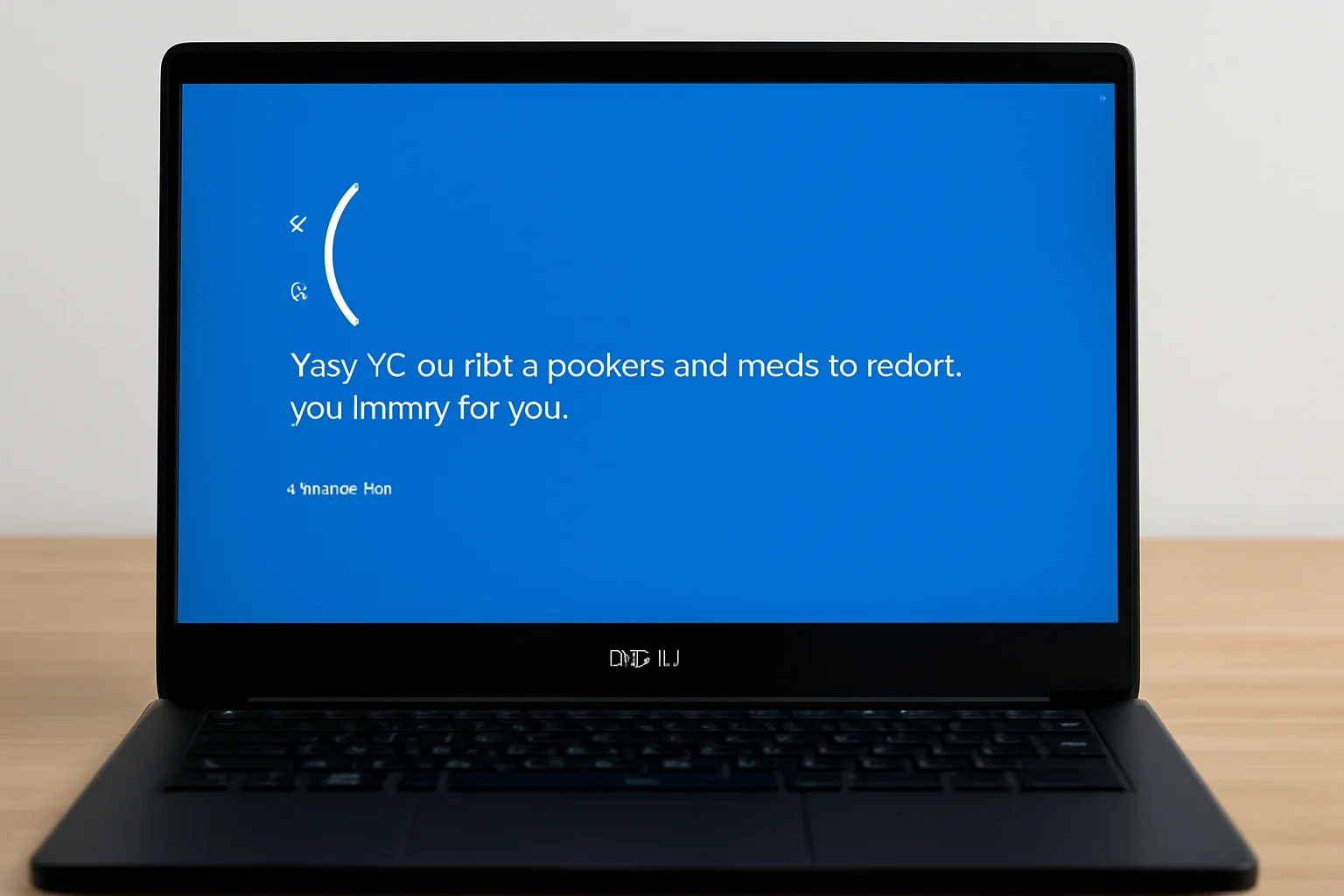
Dell Laptop Blue Screen: Causes, Fixes, and Complete Troubleshooting Guide
1. Introduction
Modern laptops have become essential tools for work, education, and entertainment. Among the many laptop brands available today, Dell is widely known for producing reliable and high-performance devices. However, like all computers, Dell laptops can sometimes experience technical problems. One of the most common and frustrating issues users face is the dell laptop blue screen.
The blue screen, also called the Blue Screen of Death (BSOD), appears when the computer encounters a serious system error that prevents it from operating normally. When this happens, the operating system immediately stops running and displays a blue screen with an error message.
For many users, seeing a dell laptop blue screen can be confusing and worrying. It often interrupts important work, causes system crashes, and may lead to data loss if the problem is not fixed quickly.
This guide explains the dell laptop blue screen issue in detail using easy and clear language. It covers the causes, error codes, troubleshooting methods, prevention strategies, and solutions that can help users fix the problem effectively.
2. What is a Dell Laptop Blue Screen?
A dell laptop blue screen is an error screen that appears when the operating system detects a serious system failure. The system stops all processes to prevent damage to hardware or data.
Most Dell laptops run on Microsoft Windows, and when Windows detects a critical error it cannot recover from, it forces the computer to stop and restart. This process protects the system from further problems.
The screen usually displays a message similar to:
“Your PC ran into a problem and needs to restart.”
The blue screen also shows technical information such as error codes and diagnostic messages that help identify the cause of the crash.
Although the dell laptop blue screen may look alarming, it is actually a protective measure built into the operating system.
3. Understanding the Blue Screen of Death (BSOD)
The Blue Screen of Death (BSOD) is one of the most well-known system error messages in Windows computers. It occurs when the operating system encounters a critical error that cannot be safely handled while the system is running.
When the error happens, Windows performs the following actions:
- Stops all running processes
- Displays the blue error screen
- Shows the error code and diagnostic information
- Creates a crash dump file for analysis
- Automatically restarts the computer
This process ensures that faulty programs, drivers, or hardware components do not cause further damage to the system.
Although the dell laptop blue screen stops the computer temporarily, it also provides valuable information that can help technicians diagnose the problem.
4. How the Dell Laptop Blue Screen Appears
The appearance of the dell laptop blue screen is usually consistent across different versions of Windows.
A typical blue screen includes several elements that help identify the problem.
| Component | Description |
|---|---|
| Blue background | The screen color indicating a system crash |
| Error message | Explains that the computer encountered a problem |
| STOP code | A code that identifies the specific error |
| QR code | Allows users to scan for troubleshooting help |
| Restart message | Indicates that the system will restart automatically |
These elements help users and technicians understand what caused the dell laptop blue screen and how to fix it.
5. What is a STOP Code?
A STOP code is a diagnostic code displayed on the blue screen that identifies the specific reason for the crash.
STOP codes usually appear in hexadecimal format and provide information about the type of error that occurred.
Examples of STOP codes include:
| STOP Code | Meaning |
|---|---|
| 0x00000050 | Memory access error |
| 0x0000007B | Boot device not accessible |
| 0x0000001E | Kernel exception error |
| 0x00000124 | Hardware failure |
These codes are extremely useful when diagnosing a dell laptop blue screen problem because they indicate whether the issue is related to hardware, software, drivers, or system files.
6. Common Blue Screen Error Messages
Several error messages commonly appear when a dell laptop blue screen occurs. These messages help identify the cause of the crash.
Below is a table of frequently encountered BSOD errors.
| Error Message | Possible Cause |
|---|---|
| MEMORY_MANAGEMENT | RAM failure |
| CRITICAL_PROCESS_DIED | System process failure |
| DRIVER_IRQL_NOT_LESS_OR_EQUAL | Driver conflict |
| PAGE_FAULT_IN_NONPAGED_AREA | Memory or driver issue |
| SYSTEM_SERVICE_EXCEPTION | Software conflict |
| INACCESSIBLE_BOOT_DEVICE | Hard drive or boot error |
These errors typically indicate problems with memory, drivers, or system configuration.
7. Main Causes of Dell Laptop Blue Screen
The dell laptop blue screen can occur due to several technical problems. In most cases, the issue is related to hardware faults, outdated drivers, corrupted files, or incompatible software.
Understanding the root causes can make troubleshooting easier and help prevent future crashes.
Major causes include
- Hardware failures
- Outdated device drivers
- Corrupted system files
- Virus or malware infection
- Overheating components
- Faulty Windows updates
- Software conflicts
These issues interfere with the operating system and cause the computer to crash.
8. Hardware Causes of Dell Laptop Blue Screen
Hardware issues are one of the most common reasons behind a dell laptop blue screen.
When internal components stop functioning properly, the operating system may fail to operate normally.
Faulty RAM
Random Access Memory (RAM) is responsible for storing temporary data used by programs. If the RAM becomes damaged or unstable, the system may crash repeatedly.
Symptoms of faulty RAM include:
- Frequent system crashes
- Random restarts
- Application errors
- Blue screen errors
Hard Drive Failure
The hard drive stores the operating system and all system files. If the drive becomes corrupted or damaged, Windows may not be able to access essential data.
This can result in a dell laptop blue screen during startup.
Overheating Components
Excessive heat can damage internal components such as the CPU or graphics card. When temperatures rise too high, the system may shut down automatically to prevent permanent damage.
Motherboard Issues
The motherboard connects all hardware components. If the motherboard develops faults, communication between components may fail, causing system crashes.
9. Software Causes of Dell Laptop Blue Screen
Software problems can also lead to a dell laptop blue screen.
Sometimes newly installed programs or updates conflict with system processes and cause instability.
Common software-related causes
- Corrupted operating system files
- Incompatible software programs
- Faulty Windows updates
- Malware infections
- System configuration errors
When these issues occur, the operating system cannot function normally and may display a blue screen.
10. Driver Problems and Blue Screen Errors
Device drivers allow hardware components to communicate with the operating system.
If drivers become outdated, corrupted, or incompatible, they can cause a dell laptop blue screen.
Some common driver-related issues include:
| Driver Type | Possible Problem |
|---|---|
| Graphics driver | Display crashes |
| Network driver | Internet failures |
| Storage driver | Boot errors |
| Audio driver | System instability |
Updating drivers regularly can reduce the chances of encountering a dell laptop blue screen.
11. How to Identify the Dell Laptop Blue Screen Problem
Identifying the cause of a dell laptop blue screen requires careful analysis.
Users can examine several diagnostic tools to understand what triggered the crash.
Methods used to identify the problem
- Checking the STOP code displayed on the blue screen
- Reviewing system logs in Event Viewer
- Examining crash dump files
- Running hardware diagnostic tools
These tools provide important clues about the underlying issue.
12. Basic Troubleshooting Steps
Many dell laptop blue screen problems can be solved with simple troubleshooting methods.
Before performing advanced repairs, users should try basic solutions.
Basic fixes include
- Restarting the laptop
- Disconnecting external devices
- Updating Windows
- Installing the latest drivers
- Running a virus scan
- Checking hardware components
These steps often resolve minor system conflicts that cause blue screen errors.
13. Advanced Troubleshooting Methods
If the dell laptop blue screen continues to appear, more advanced troubleshooting techniques may be required.
Some effective methods include:
- Booting the computer in Safe Mode
- Running the System File Checker (SFC) command
- Restoring the system to an earlier state
- Resetting BIOS settings
- Reinstalling the operating system
These solutions help repair corrupted system files and restore system stability.
14. Diagnostic Tools for Blue Screen Errors
Several built-in tools can help diagnose the dell laptop blue screen problem.
| Tool | Function |
|---|---|
| Event Viewer | Shows system error logs |
| Windows Memory Diagnostic | Tests RAM for faults |
| System File Checker | Repairs corrupted files |
| Dell SupportAssist | Detects hardware issues |
| CHKDSK | Checks hard drive errors |
Using these tools can significantly improve troubleshooting accuracy.
15. Preventing Dell Laptop Blue Screen Errors
Preventing a dell laptop blue screen is easier than fixing one. Regular maintenance can keep the system stable and reduce the risk of crashes.
Important prevention strategies include:
- Keeping Windows updated
- Updating drivers regularly
- Installing reliable antivirus software
- Avoiding suspicious software downloads
- Cleaning laptop vents to prevent overheating
- Performing regular system scans
Following these practices can reduce the chances of encountering a dell laptop blue screen.
16. When to Contact Dell Support
Sometimes the dell laptop blue screen cannot be solved through basic troubleshooting.
In such cases, users should contact **Dell technical support for professional assistance.
Technical experts can:
- Perform advanced diagnostics
- Identify hardware failures
- Replace faulty components
- Repair system errors
Professional help ensures that the problem is resolved safely and effectively.
17. Benefits of Fixing the Blue Screen Quickly
Fixing the dell laptop blue screen problem as soon as possible provides several advantages.
| Benefit | Explanation |
|---|---|
| Prevents data loss | Reduces risk of losing important files |
| Improves performance | Restores normal system operation |
| Protects hardware | Prevents further damage to components |
| Increases reliability | Makes the laptop stable and dependable |
Addressing the problem early can save time, money, and frustration.
18. Conclusion
The dell laptop blue screen is a serious system error that occurs when the operating system encounters a critical problem. Although the blue screen may appear alarming, it is actually a protective mechanism designed to prevent damage to the computer.
This issue can be caused by hardware failures, driver conflicts, software errors, corrupted files, or overheating components. Understanding the causes and solutions helps users diagnose the problem effectively.
By following proper troubleshooting methods, using diagnostic tools, and maintaining the system regularly, most dell laptop blue screen problems can be resolved successfully.
With the right knowledge and preventive measures, users can ensure that their Dell laptops remain stable, reliable, and efficient for everyday use.