Software Egg Explained: Complete Beginner to Advanced Guide
1. Introduction to Software Egg
In the world of software development, packaging and distributing applications efficiently is very important. One of the early solutions created for this purpose is known as a software egg. Although the term may sound unusual at first, it plays a meaningful role in how developers manage and share software components.
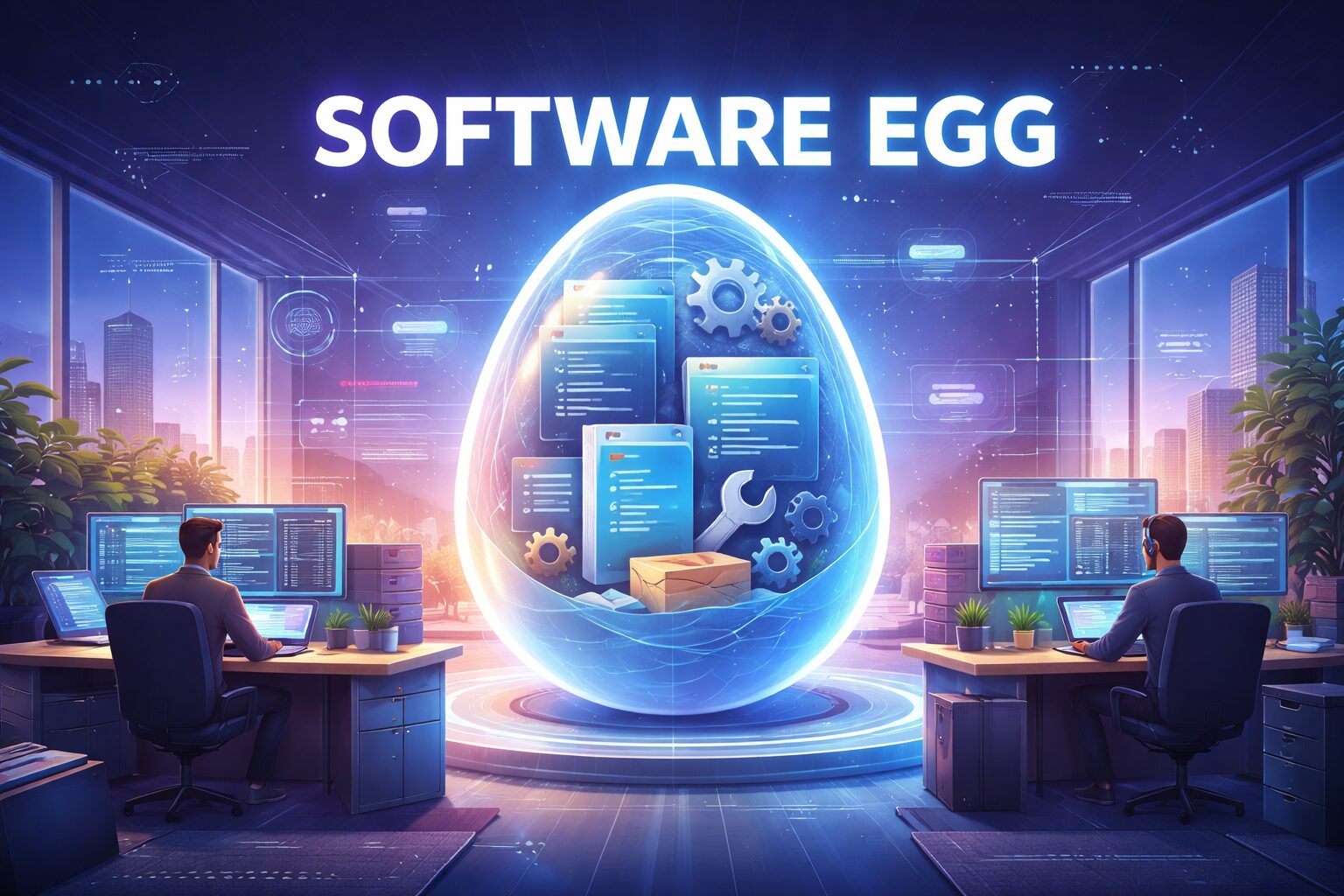
A software egg is essentially a packaged format that bundles everything needed to run a program into a single file. This includes the main code, supporting libraries, configuration details, and other dependencies. The purpose is to simplify installation and ensure that software works correctly across different environments.
The term “egg” symbolizes something complete and self-contained, similar to how an egg in nature contains everything needed for growth. In software, it reflects the idea of a complete package ready to be used.
2. What is a Software Egg? (Detailed Explanation)
A software egg is a distribution format used mainly in Python programming to package and distribute libraries or applications. It is designed to include all essential components required for execution.
In simple terms, instead of installing multiple files and dependencies separately, a software egg allows developers to use one bundled file that contains everything. This reduces complexity and saves time.
To better understand this concept, consider the following analogy:
- A traditional software setup is like cooking a meal from scratch where you need to gather ingredients.
- A software egg is like a ready-made meal where everything is already prepared and packaged.
This bundled approach makes deployment easier and more reliable.
3. History and Evolution of Software Egg
The concept of software egg originated in the early 2000s, particularly within the Python ecosystem. At that time, managing dependencies and distributing software was challenging for developers.
To solve this problem, the egg format was introduced as part of Python’s setuptools. It allowed developers to package their applications in a structured and reusable way.
Over time, technology evolved, and newer formats such as Wheel (.whl) replaced eggs. Wheels offered faster installation and better compatibility with modern tools. As a result, the usage of software egg has declined, but it still exists in older systems and legacy projects.
4. Structure of a Software Egg
Understanding the structure of a software egg helps in learning how it works internally. A software egg is typically a compressed archive, similar to a ZIP file, but with a specific structure.
Main Components
A software egg includes several important elements:
- Source code of the application
- Metadata such as version, author, and dependencies
- Configuration files
- Additional resources like images or compiled files
Internal Organization
The internal structure is organized in a way that tools can easily read and install the package. One of the key directories is:
- EGG-INFO: Contains metadata and package details
This structured approach ensures that the software egg can be installed and used without manual configuration.
5. Key Features of Software Egg
Software egg provides several useful features that made it popular among developers:
- It acts as a self-contained package
- It simplifies installation processes
- It supports dependency management
- It allows multiple versions of a package to coexist
- It improves portability across systems
These features helped developers reduce errors and improve efficiency during deployment.
6. How Software Egg Works
The working of a software egg involves three main steps: creation, distribution, and installation.
First, developers package their application into an egg file using tools like setuptools. This process collects all required components and organizes them into a single archive.
Second, the egg file is distributed to users or uploaded to repositories.
Finally, users install the software egg using tools such as easy_install. During installation, the system extracts the contents and sets up the environment for execution.
This automated process removes the need for manual setup and ensures consistency.
7. Advantages of Software Egg
Software egg offers multiple advantages, especially in older development environments.
One of the main benefits is simplicity. Developers can package complex applications into a single file, making distribution easier. It also reduces the chances of missing dependencies, which is a common issue in software installation.
Another advantage is portability. Since everything is included in one package, the software can run on different systems without additional configuration.
8. Limitations of Software Egg
Despite its benefits, software egg has several limitations that led to its decline.
One major issue is compatibility with modern tools. Many current systems prefer newer formats like wheels, which are faster and more efficient.
Another limitation is the lack of standardization. Different versions of egg files may behave differently, causing confusion for developers.
Additionally, the installation process using older tools like easy_install is now considered outdated.
9. Software Egg vs Wheel (.whl)
As technology advanced, the wheel format replaced software egg as the preferred packaging method. The differences between the two formats are shown below:
| Feature | Software Egg | Wheel (.whl) |
|---|---|---|
| Format Type | Older packaging format | Modern standard |
| Installation Speed | Slower | Faster |
| Compatibility | Limited | High |
| Tool Support | Deprecated tools | Fully supported |
| Usage | Legacy systems | Current development |
Which One is Better?
Wheel is considered better because it provides faster installation and improved compatibility. However, software egg may still be found in older projects.
10. How to Create a Software Egg
Creating a software egg involves setting up a Python project and using packaging tools.
The process typically includes defining project metadata, organizing files, and running a build command. This generates the egg file, which can then be distributed.
Although this method is less common today, understanding it helps in working with legacy systems.
11. How to Install and Use Software Egg
Installing a software egg was traditionally done using easy_install. This tool automatically handled dependencies and installation.
In modern environments, developers may need to convert egg files into wheel format or install them manually.
Despite being outdated, it is still possible to use software eggs in controlled environments.
12. Practical Examples of Software Egg
Software eggs were widely used for distributing Python libraries. For example, a developer could package a web application or utility tool into an egg file and share it with others.
In enterprise environments, eggs were used for internal tools where consistency and reliability were important.
13. Software Egg in Modern Development
Today, software egg is mostly considered a legacy format. Modern development practices rely on tools like pip and wheel for packaging and distribution.
However, understanding software egg remains useful for maintaining older projects and learning the evolution of software packaging.
14. Common Confusions About Software Egg
Many beginners confuse software egg with other terms.
One common confusion is between software egg and “Easter egg,” which refers to hidden features in software. Another misunderstanding is thinking that egg files are just simple ZIP files, while they actually follow a specific structure.
Clarifying these differences helps in better understanding the concept.
15. Use Cases of Software Egg
Software egg was used in various scenarios:
- Distributing Python libraries
- Sharing internal tools within organizations
- Deploying applications in controlled environments
- Managing dependencies in older systems
These use cases highlight its importance in earlier stages of software development.
16. Best Practices for Software Packaging
Even though software egg is outdated, good packaging practices are still essential.
Developers should focus on:
- Using modern tools like pip
- Maintaining clear dependency lists
- Following standard packaging formats
- Keeping software updated
These practices ensure better performance and compatibility.
17. Future of Software Egg
The future of software egg is limited as newer technologies continue to replace it. Most developers now prefer modern formats that offer better speed and reliability.
However, software egg will remain part of programming history and may still be used in legacy systems.
18. Conclusion
The concept of software egg represents an important step in the evolution of software packaging. It introduced the idea of bundling all necessary components into a single, easy-to-use format.
Although it is no longer widely used, understanding software egg helps developers appreciate how modern packaging systems have evolved. For current projects, it is recommended to use newer formats like wheel, but knowledge of software egg remains valuable for handling older systems.
19. FAQs
1. What is a software egg in Python?
A software egg is a packaged format that includes code, dependencies, and metadata for easy distribution and installation.
2. Is software egg still used today?
It is mostly outdated but may still be used in legacy systems.
3. What replaced software egg?
The wheel (.whl) format replaced software egg due to better performance and compatibility.
4. Can I still install .egg files?
Yes, but it may require older tools or manual methods.
5. What is the main purpose of a software egg?
Its main purpose is to simplify software distribution by bundling everything into a single package.